
Good linear lighting comes down to a handful of choices: the right tape for the look you want, the right colour and output, a channel that suits the surface, and a driver sized for the run. This guide walks through each one, then looks at the applications our products are used in most.
COB, SMD or Flex Neon?
SMD LED strip uses individual LED chips spaced along the tape. It is efficient and bright, and it works best set back in a channel with a diffuser so the individual points of light blend together. Our 300, 600 and 800 Series are SMD strips.
COB tape (chip on board) packs LEDs so closely under a phosphor coating that it gives a continuous, dot-free line of light, even in shallow channels or where the tape is visible. It is the usual choice for coves, shelving, millwork and anywhere the line of light is part of the design.
Flex neon encloses the LEDs in a solid silicone profile with a diffused face. It gives a true neon look, is sealed for wet and outdoor locations, and bends to follow curves and outlines.
Choosing a Colour Temperature
| Colour Temperature | Look | Typical Spaces |
|---|---|---|
| 2400K to 3000K | Warm white | Homes, restaurants, hotels, spas |
| 3500K to 4000K | Neutral white | Kitchens, retail, offices, washrooms |
| 5500K and above | Cool white / daylight | Task, display, commercial and back-of-house |
| Tunable white | Adjustable warm to cool | Living spaces, boardrooms, wellness spaces |
| RGB / RGBW | Colour changing | Feature walls, hospitality, facades, signage |
When the tape sits alongside other fixtures, match their colour temperature so the room reads as one.
Colour Quality (CRI)
CRI (colour rendering index) measures how naturally a light source shows colours, on a scale up to 100. Most of our LED tape and neon is rated CRI 90 or higher, which keeps wood, stone, fabric and skin tones looking true. That matters most in kitchens, millwork, retail displays and anywhere finishes are on show.
IP Ratings: Where Can It Go?
| Rating | Protection | Use It For |
|---|---|---|
| IP20 | None against water | Indoor, dry locations |
| IP65 | Water jets | Damp areas, covered outdoor areas, splash zones |
| IP66 | Powerful water jets | Exposed outdoor locations |
| IP67 | Temporary immersion | Wet locations, outdoor, steam rooms (with a rated product) |
| IP68 | Continuous immersion | As stated on the product’s cut sheet |
The IP rating covers the tape or fixture itself. Connections, end caps and drivers also need to suit the location.
12V, 24V or 120V?
24V is our standard for most tape and neon. It can run longer than 12V before the far end starts to dim (voltage drop), and it draws less current for the same wattage.
12V suits short runs, furniture and cabinet lighting, and projects that already use 12V power supplies.
120V line-voltage tape plugs straight into line power with no driver, and comes on long reels for facades, warehouses and long outdoor runs. It must be installed by a licensed electrician.
For long low-voltage runs, feed power at both ends or from the middle, or split the run into sections with their own feeds. Each cut sheet lists the maximum run for that product.
Sizing a Driver
- Find the power per metre on the cut sheet (W/m).
- Multiply by the length of tape on that driver to get the total watts.
- Choose a driver loaded to no more than about 80% of its rating.
Example: a 5 m run of 320 Series COB tape at 8 W/m draws 40 W. A 60 W driver is a good fit.
Then choose the type of driver by how the lights will be controlled:
- Non-dimmable Class 2 drivers for simple on/off circuits.
- TRIAC / phase dimmable drivers to work with standard wall dimmers.
- 0–10V drivers for commercial lighting controls.
- Driver and dimmer in one wall box (our LED-DIM series) for single-colour or tunable white tape without a separate driver location.
Not sure? Send us the lengths and the dimmers you plan to use, and we’ll specify the drivers.
Channels and Diffusers
An aluminum channel protects the tape, helps it run cooler and gives a clean, finished line. The main decisions are:
- Mounting: surface, recessed, mud-in / plaster-in drywall (trimless), corner, pendant, in-ground or flexible for curves.
- Width: the channel must fit the width of the tape. Each channel page lists the widest strip it takes.
- Diffuser: frosted covers soften the light; milky (opal) covers hide the LEDs further at a small cost in brightness. Deeper channels and COB tape give the smoothest line.
- Finish: silver, black or white to suit the ceiling, millwork or wall.
Applications
Coves and Ceilings
Plaster-in and mud-in channels with dot-free COB tape give a continuous line of light with no visible aluminum once the drywall is finished. For indirect cove lighting, a recessed cove profile washes the ceiling with soft light. Warm white at CRI 90 suits most living and hospitality spaces.
Millwork, Shelving and Feature Walls
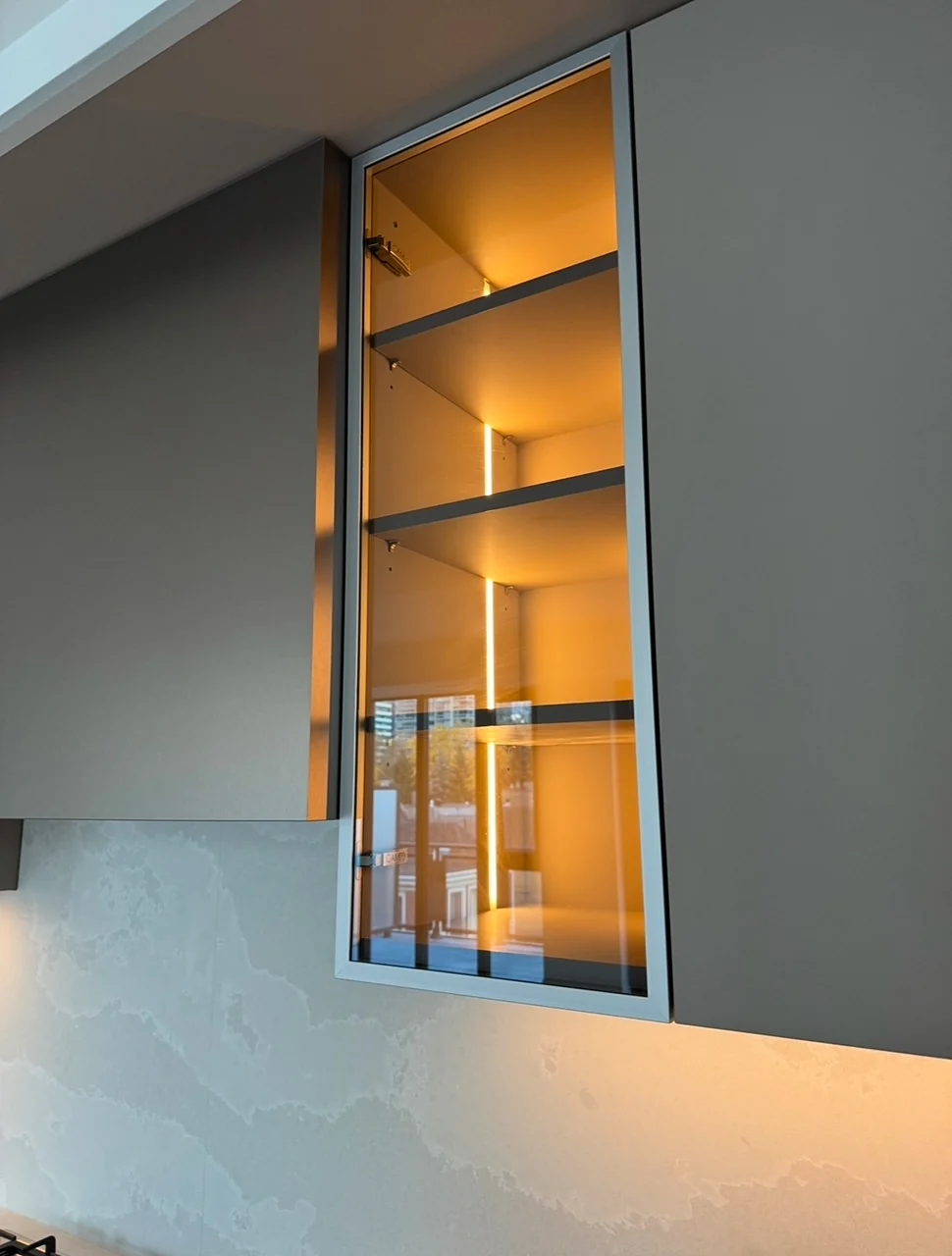
Low-profile surface channels and slim COB tape fit under cabinets, inside shelving and around TV walls. Tunable white COB lets the space shift from warm evening light to bright task light. For cabinets with doors, our DT-DS cabinet control system adds door, motion and touch sensors.
Saunas and Steam Rooms
Our sauna and steam tapes are sealed in a thick silicone jacket and rated to operate at up to 90 °C. Mount them in the NL-AP-1715 channel and keep the driver outside the hot room, as the cut sheet specifies.
Facades and Outdoor
IP67 flex neon outlines buildings, stairs, decks and signage. IP66 wall washers graze facades, columns and canopies. For long outdoor runs, 120V line-voltage tape and neon come on 50 m reels and need no low-voltage driver.
Backlit Stone, Onyx and Signage
LEDSHEET flexible LED panels give even, spot-free backlighting behind onyx table tops, vanities, stone feature walls, glass and signs. The sheets can be cut with scissors along the printed lines to fit custom shapes.
Drywall and Trimless Lines
Trimless mud-in profiles are installed before the drywall is finished, then taped and mudded over so only the line of light remains. Wider drywall channels take two runs of tape for bold, high-output lines.
We Can Help
Send us your drawings, fixture schedule or a description of the space and we’ll recommend the tape, channel and driver for each run, then quote the full package.